How to List Your Event in Japan and Reach New Audiences

November 5, 2026 · 16 reads
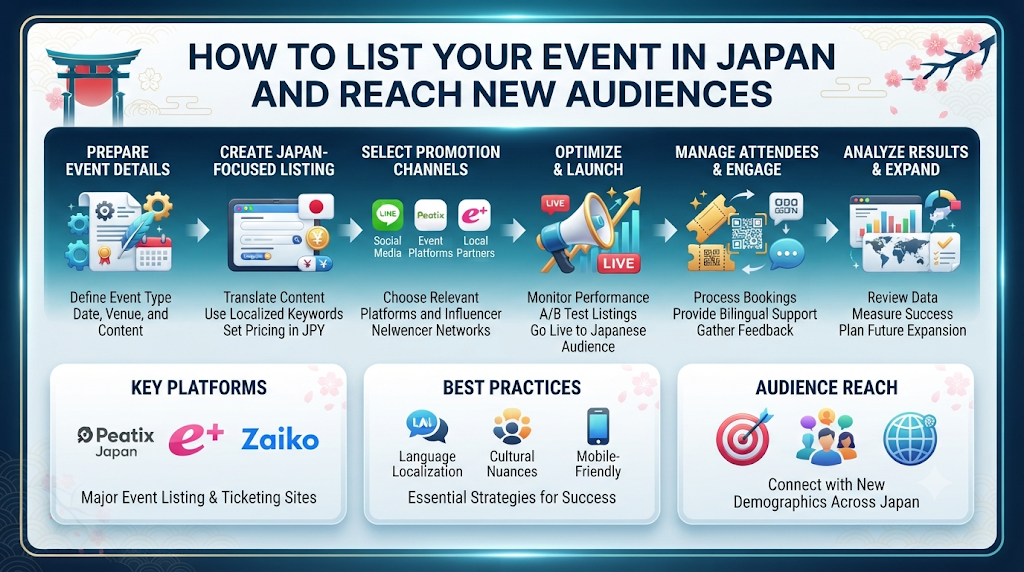
Your cousin lands in Japan next month. You want to show them something real, not just a list of famous spots. A good event could do it, like a concert, a festival, or a workshop. But who has time to search a dozen places?
That’s a common problem for residents and visitors alike. People want a plan that feels local and easy. They need one place to see what’s on.
MyEventsNow Japan offers that place. You can browse events, read ticket details, and use available booking options. Hosts use it too, to share their plans.
This article walks through both seats. First, you’ll sit with the guest. Then you’ll move over to the host.
What MyEventsNow Japan Is All About
MyEventsNow Japan is an online platform for finding and promoting events. Think of it as a notice board that covers the whole country. Organizers, businesses, communities, and attendees all meet there.
Guests use it to look around. They can browse events and read ticket information. They can also find registration and booking options when an organizer provides them. The events range from concerts and festivals to workshops, exhibitions, conferences, networking events, and cultural celebrations.
Hosts use it to be seen. They can publish a schedule, add venue information, and share admission details. Schools, businesses, agencies, community groups, and independent professionals can all list events.
Around the listings sits a wider marketplace. It includes venue exploration, cultural experiences, organizer management, and community engagement. You’ll meet each one again below.
Guests and Hosts: A Quick Side-by-Side
Guests and hosts care about different things. This table lines them up so you can compare.
| Area | For Attendees | For Organizers |
|---|---|---|
| Main purpose | Spot events that fit your plans | Put an event in front of interested people |
| Event discovery or publishing | Look through listings across Japan | Create listings and publish schedules |
| Tickets and admission | Review ticket information | Share admission details |
| Registration and participation | Use registration options where offered | Offer registration where supported and enabled |
| Event information | Read schedules and venue details | Provide schedules and venue details |
| Marketplace extras | Explore venues, culture, and community | Use organizer management and community engagement |
Look across each row to compare the two sides. Notice how both columns describe one shared event. Guests read what hosts write, so each side depends on the other.
Part One: Sitting in the Guest’s Seat
Let’s start with you and your visiting cousin. The steps below go from a loose idea to a booking choice.
Browsing what’s coming next
Begin with a wide look. MyEventsNow Japan lists Upcoming Events in Japan across many types. You may spot concerts, festivals, workshops, exhibitions, conferences, networking events, and cultural celebrations on the same screen.
That wide view helps when your plans are loose. Your cousin might like a festival. You might prefer a workshop. Seeing both side by side makes the choice easier.
Here’s a tip. Set a budget of time, not money. Decide how many hours you can give. Then keep only the listings that fit.
Tokyo, from quiet seminars to loud nights
Tokyo packs a lot into one list. Events in Tokyo include live performances, technology meetups, nightlife, professional seminars, food festivals, and entertainment experiences. The mix suits quiet types and night owls alike.
Think about who’s with you. A curious cousin may enjoy a food festival. A coworker may want a seminar. A friend who loves gadgets may look for a meetup.
Try this tip: pick one event per day, not three. Rushing spoils the fun. Read each schedule closely before you plan the next one.
Osaka, where work and community meet
Osaka’s list covers music, business, and neighborhood life. Events in Osaka include music concerts, business conferences, cultural activities, community gatherings, and local experiences. Each one shows a different side of the city.
A traveler can try a local experience. A resident can drop into a community gathering. A business visitor can check the conference listings.
A good tip is to read the venue information, then picture your route. Decide how you’ll get there and how long it will take. Doing this early keeps the day light.
Festivals that follow the seasons
Festivals link people to the calendar. The platform’s directory of Japanese Festivals and Events covers traditional celebrations, seasonal festivals, cultural performances, and unique Japanese experiences. Residents and international visitors can both use it.
For your cousin, a seasonal festival could show Japan in a lively way. For you, it could mean seeing a tradition again with fresh eyes. Either way, watch and listen with respect.
Here’s a tip. Look at the listed date first. Seasonal events can fall at a set time of year, so a missed date can mean a missed chance.
Gigs, DJs, and artists you haven’t heard yet
Music fans get a corner of their own. The platform lists live music performances, independent artists, and DJ events in cities across Japan. If Concert Tickets Japan is what you’re after, start with these listings.
Some people want a classic concert. Others like to hear a new artist before their friends do. A DJ night suits anyone who’d rather dance.
One tip: read the admission details for each show, even if two look alike. Rules and options may differ. A quick look now saves a surprise later.
Skill-building and people-meeting
Some outings are about learning. Listings include workshops, exhibitions, conferences, and networking events. Tokyo adds professional seminars. Osaka adds business conferences.
Students can pick up a skill. Professionals can meet others in their field. A curious visitor can simply stroll through an exhibition.
Here’s a tip. Arrive with one question in mind. Maybe you want to see how a craft works. Maybe you want to ask someone in the field about their job. A question gives your visit a focus.
Reading the details, then choosing your booking path
You’ve chosen an event. Before you book, read the listing from top to bottom. For smooth Online Event Ticket Booking Japan, the details matter most. Check the schedule, the venue, and the admission information.
Then look at your options. MyEventsNow Japan lets you explore ticket information and find the registration and booking options available. They can differ between organizers.
A final tip: follow each step in order. If anything seems unclear, use the event communication options where they’re offered. Slow and steady works well here.
Two Cities, Five Categories
Residents often ask how Tokyo and Osaka differ. This table shows what the platform lists for each city.
| Event Type | Tokyo | Osaka |
|---|---|---|
| Music and live performances | Live performances | Music concerts |
| Business and professional events | Professional seminars | Business conferences |
| Technology events | Technology meetups | Not specified |
| Cultural and community activities | Not specified | Cultural activities, community gatherings |
| Food, nightlife, and entertainment | Food festivals, nightlife, entertainment experiences | Not specified |
Before you plan around any event, check its date, venue, and admission details.
Part Two: Sitting in the Host’s Seat
Now slide over to the other chair. You have an event to share, and you want the right people to see it.
Building a listing with the right details
A listing is your invitation. Organizers can create event listings, publish schedules, give venue information, and share admission details. When you List Your Event in Japan, these four items do most of the talking.
This helps newcomers and veterans alike. A first-timer gets a clear set of things to fill in. A busy agency gets a neat format to follow.
Here’s a tip. Answer “what, where, and when” first. Put those three facts at the very top. Add the extras afterward.
Hosts of every size
The platform isn’t only for big names. Businesses, educational institutions, event agencies, community groups, and independent professionals can list events. As an Event Ticketing Platform Japan, MyEventsNow gives each of them a way to share events with potential participants.
A teacher might post a workshop. A neighborhood group might announce a gathering. A freelancer might share a seminar.
Tip: write for one typical guest. Imagine their questions. Then answer those questions in your listing.
Sign-ups and keeping in touch
Registration helps hosts and guests find each other. As an Event Registration Platform Japan, MyEventsNow connects attendees with organizers. It uses available registration processes, participation information, and event communication options. The details depend on the organizer and on what’s supported.
Hosts get a clearer picture of who may come. Guests get a clearer idea of what to do next. Both sides gain from simple steps.
Here’s a tip. Explain the sign-up process in short lines. Say what guests should do first. Then say where their questions can go.
Online tickets and the fine print
Hosts who want to Sell Event Tickets Online Japan can use the platform’s event publishing workflows. The platform also describes registration and payment-processing capabilities where supported and enabled. So online tickets and payments won’t apply to every event.
Guests should read each listing to see what applies. Hosts should check their own setup before they share plans.
One tip: describe only what’s switched on for your event. If a feature isn’t enabled, leave it out. Plain honesty earns trust.
Venues, Culture, and Community Around Each Event
Around every event sit a few other pieces. The platform names four of them: venue exploration, cultural experiences, organizer management, and community engagement.
Venue exploration is about place. Guests can learn about the spots that host events. Hosts can treat venue information as part of their story.
Cultural experiences invite residents and visitors to meet Japanese traditions and local life. Read these listings slowly and with respect. They offer more than a date and a time.
Organizer management covers the planning side. Hosting takes steady effort, and this part supports it. Community engagement then links hosts and guests who share an interest.
Together, these four pieces widen the picture. You see an event, its place, its culture, and its people.
Small Moves That Help Both Sides
If you’re going
- Save two options, not one. A backup plan helps if your first choice falls through.
- Say the date and place out loud. Hearing them helps you catch mistakes.
- Share the plan with whoever’s coming. Everyone should know the time and the place.
- Reread the listing the day before. Hosts may have added news.
If you’re hosting
- Test your description on a friend. Confusion shows where the text needs work.
- Use the same words for the same things. Mixed labels can puzzle readers.
- Post changes as soon as you know them. Early notice respects people’s time.
- Thank people who ask questions. Kind replies make guests feel welcome.
A Hypothetical Walk-Through: A Seminar in Tokyo
This example is hypothetical. It shows one possible path and promises nothing. No real names are used.
Imagine an educational institution in Tokyo that wants to run a professional seminar. A staff member starts with a short summary. It says who the seminar is for and what people can learn.
Next, she adds the venue information and the schedule. She includes the admission details and publishes the listing. If registration is supported and enabled, she adds the sign-up steps. She also plans to answer questions through the communication options available.
Meanwhile, a working professional in Tokyo wants to learn something new. He searches the Tokyo listings after work. The seminar catches his eye.
He reads the summary, the schedule, the venue, and the admission details. Then he checks the booking or registration option available. He follows the steps and makes his choice.
That’s the whole story. It has no crowd size and no result. It only shows how a clear listing meets a careful reader.
Your Questions, Answered Simply
1. Where do I start if I want weekend ideas?
Open the listings and browse upcoming events. You’ll see concerts, festivals, workshops, and more. Pick a type that fits your mood, then read the details.
2. Does Tokyo have more than big shows?
Yes. Tokyo listings include live performances, technology meetups, nightlife, professional seminars, food festivals, and entertainment experiences. That’s a wide mix for different tastes.
3. Is there anything for fans of smaller music acts?
Independent artists and DJ events sit beside live music performances in Japanese cities. Each listing carries its own details. Read them before you choose.
4. What should I read before I choose a ticket option?
Start with the schedule, the venue, and the admission details. Then check the registration or booking options shown. These depend on the organizer.
5. Are community events part of the picture?
They are. Community engagement is part of the marketplace, and Osaka lists community gatherings. Community groups can post events too.
6. How does a host introduce an event to the public?
A host creates a listing. It holds a schedule, venue information, and admission details. Once it’s published, interested people can read it.
7. Who can post an event?
Businesses, educational institutions, event agencies, community groups, and independent professionals can list events. Size doesn’t matter. A small team and a large one use the same basics.
8. Can a host collect sign-ups through the platform?
The platform connects attendees with organizers through available registration processes. This works where it’s supported and enabled. Hosts should check what applies to their event.
9. Should every host expect online payments?
No. Payment-processing capabilities exist where supported and enabled. They won’t suit every event, so read each listing carefully.
10. Will hosts and guests be able to talk?
The platform offers event communication options that link organizers and attendees. What’s available depends on the event. Hosts can use these options to share participation information.
Closing Words
Back to your cousin and that free weekend. A clear listing, a careful reader, and a few honest details can turn a loose idea into a real plan. MyEventsNow Japan supports both sides. Guests browse, read, and use the options available. Hosts share schedules, venues, and admission details with people who may care.
Good plans come from small habits. Read closely when you attend. Write plainly when you host. Japan has plenty to see, and a good listing helps you find the right piece of it.
Leave a Reply