Best Products in India: The Honest Buyer’s Guide with Verified Reviews and Smart Comparisons

October 30, 2026 · 5 reads
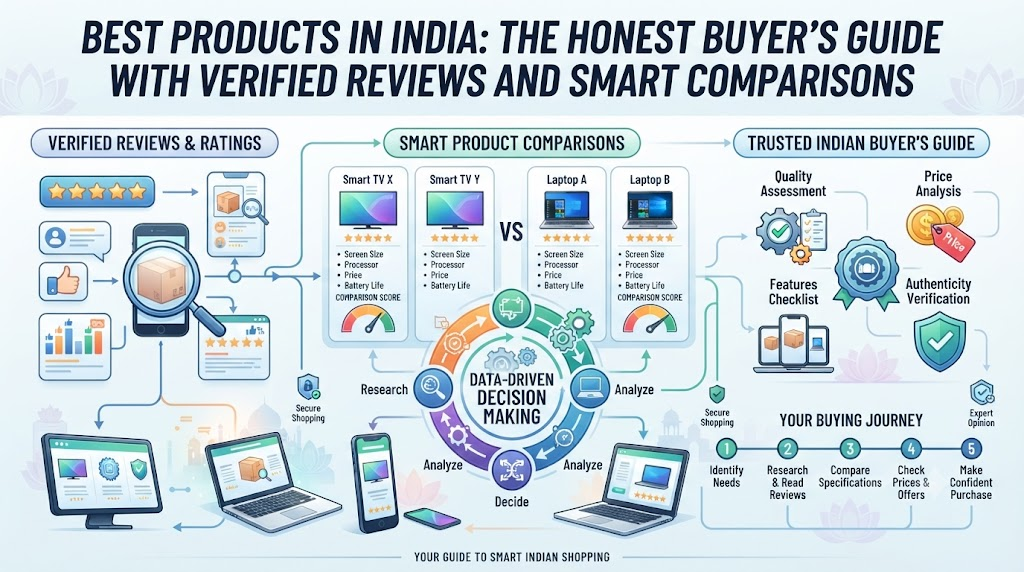
The Real Problem with Online Shopping in India
Last month my cousin ordered a mixer grinder with 4.8 stars. It arrived with a cracked jar. The seller vanished. The brand sent an auto-reply. She never got her refund. Her mistake was simple. She trusted the stars and read nothing else.
Her story is common now. Indian shoppers face lakhs of products on every app. Each page glows with praise. Yet half of that praise may be bought. Paid ratings. Bot comments. Sponsored hype. All of it looks real at first glance.
So what should a careful buyer do? Slow down. Learn to read the signs. This guide walks you through the whole process step by step. You will learn where to look, what to check, and who to trust.
iReviewed makes this easier. It is a free review platform built for Indian buyers. It brings honest product reviews, real ratings, and clear guides under one roof. Think of this page as your map for smarter buying.
Why Honest Reviews Matter for Indian Buyers
Money does not grow on trees in Indian homes. Every big buy comes from months of saving. So when a product fails, the pain feels personal. A geyser that leaks. A phone that hangs. A fan that rattles all night.
The true cost goes past the price tag. There are trips to the service center. Long calls with support teams. Days spent waiting for a spare part. Some buyers just give up and buy again. That means paying twice for one job.
Honest Product Reviews India shoppers share can stop this pain early. Real reviews come from real owners. They test the product in real homes for months. They report the flaws that ads never show.
Good reviews also protect your time. You skip weak models in ten minutes. You shortlist only solid options. Then you buy once and buy right. That is the whole point of research. A little reading today saves a lot of regret tomorrow.
How to Judge Shopping Advice Online
Advice is everywhere. Apps push it. Ads shout it. Friends forward it. But not all advice is equal. Some sources test products with care. Some just want your click. Learn the difference before your next order. The chart below shows how four common sources stack up.
| Review Source | Authenticity Level | Commercial Bias | Depth of Technical Testing | Best Use Case |
|---|---|---|---|---|
| Independent Review Platform | High (community verified) | Low (transparent disclosures) | High (side-by-side benchmarks) | Long-term buying decisions |
| E-Commerce Marketplace Star Ratings | Mixed (prone to fake reviews) | Moderate (focused on fast checkout) | Low (one-line user comments) | Checking delivery speed |
| Influencer Social Media Unboxings | Variable (often sponsored) | High (paid brand deals) | Surface level (aesthetic focus) | Visual design first looks |
| Brand Promotional Advertisements | Low (pure marketing) | Extreme (highlights only strengths) | None (avoids mentioning product flaws) | Checking official specifications |
One question cuts through all the noise. Who gains if I believe this? The seller gains from ads. The creator gains from sponsorships. Only you gain from honest testing. Real reviews also name the weak points of a product. If a source never finds a single flaw, it is selling, not telling.
Real Ratings: True Buyers vs Paid Praise
Stars tell you very little on their own. A 4.9 rating can hide a weak product. A 3.9 rating can hide a gem. The trick is to read the words under the stars. Those words reveal the real story.
Paid praise has a fixed look. It is short. It is sweet. It repeats itself. “Great product. Value for money. Go for it.” Ten such lines on one page smell like a paid batch.
Customer Reviews and Ratings from real buyers sound human instead. They carry small details that bots skip. The jar fits tight but the lid stains. The battery lasts a day but charging feels slow. Such quirks come only from daily use.
Dates matter too. A rating from delivery day shows joy. A rating from month six shows truth. Did the paint hold? Did the buttons stick? Did the service team show up on time?
Photos matter most of all. A real buyer posts a messy kitchen shot. A paid reviewer posts a studio image. Train your eyes and the fakes stand out within minutes. Your money stays safe when your reading gets sharp.
Finding Top Value for Every Indian Budget
Walk into any festive sale and you will see three kinds of buyers. One buys the cheapest thing. One buys the flashiest thing. One buys the smart thing. Only the third kind sleeps well after the bill.
Cheap is not the same as value. A ₹2,000 earbud that dies in three months costs more than a ₹5,000 pair that lasts three years. Value counts the cost per year, not just the cost today.
The best products in India often hide in mid-range price bands. A quiet local fan brand. A solid budget washing machine. A sturdy study table. Honest review pages dig out these gems for you.
So set your budget first. Say ₹30,000 for a phone. Then list what you truly need inside that cap. Good battery. Decent camera. Long update support. Skip the rest without guilt.
Wait for the right week too. Festive sales cut prices hard. Card offers add more savings on top. Exchange deals trim the final bill further. The same phone can cost far less with a little patience.
Brand Face-Off: Why Side-by-Side Research Wins
Two mixers. Same watts. Same stars. Same price. Which one lasts longer? No product page will tell you. A good Product Comparison Website will answer that for you.
These sites line up rivals in one clean sheet. Price. Motor. Build. Warranty years. Service reach. You see every gap at once. No more flipping between tabs and losing track.
The sheet also kills marketing fog. Brands hide behind big numbers. But a fair chart shows the full picture. A phone may lead on camera yet fail on battery. A TV may shine in specs yet skimp on ports.
Then layer real owner stories on top. Numbers show what a product claims. Owners show what it truly does after six months. Together they expose the winner.
Read the warranty rows with extra care. One brand covers the full unit for two years. Another covers only the motor for one year. That small line decides your future repair bills. Five minutes of chart reading saves twelve months of chasing support.
Picking the Right Apps and Digital Tools
Hardware takes up space on your shelf. Software takes up space in your day. Email tools, design apps, cloud drives, AI helpers. The wrong pick slows your whole week.
Software Reviews and Comparisons test tools in real work. They answer what product pages never say. How long is the learning curve? What hides behind the free plan? Can you leave with your data anytime?
Indian buyers must check the price angle closely. Many apps quote monthly fees in dollars. Exchange rates and taxes push the rupee cost up. Good reviews show the real INR price per month and per year.
Support tests matter for teams. When a tool breaks during a client call, fast help is gold. Reviews record how each company treats Indian users after payment.
Safety is the final check. Your invoices and client files sit inside these apps. Where is the data stored? Who can read it? Read the privacy notes before you click subscribe. A wrong tool is not just slow. It can put your whole work at risk.
Check Providers Before You Commit
Products fail sometimes. Services fail more often. Your broadband drops. Your courier delays. Your payment app freezes a transfer. Service quality shapes daily life more than any gadget.
Service Reviews India pages record this hidden side of the market. They show the real speed behind the promised speed. They show how firms behave after the sale. Ads skip all of this.
Long plans need this check the most. A yearly contract locks your money for months. So read reviews before you sign anything. One question matters above all. How fast do they fix problems?
Repair firms deserve a close look too. Check their visit charges. Check their response time on weekends. Some firms bill a fat fee just to knock on your door. Read the fine print before you book.
Ask people around you as well. A neighbor’s broadband story is worth more than any ad. Ten minutes of asking saves a full year of complaints.
After-Sales Support: How Brands Treat You Later
The sale is where shopping starts, not ends. What follows the sale decides your true experience. A claim filed. A part replaced. A polite reply or months of silence.
Brand Reviews and Complaints tell this second story. Some brands honor claims without drama. Others make you prove, chase, and wait. Complaint boards hold both kinds of records.
Read them in clusters. One angry buyer proves little. Thirty similar complaints prove a real defect. Search the product name with the word issue. Then read what long-term owners report about it.
City-wise patterns matter in India. A brand may serve metros within a day. The same brand may leave your town waiting for weeks. Check your own city before the sale.
Open complaint pages also push brands to improve. Firms act faster when buyers speak in public. Every resolved complaint you read is a free lesson. Someone else paid its price for you.
Six Smart Checks Before You Pay
Big purchases deserve a pause before the click. Run these six checks each time. Each takes a few minutes. Together they guard your money, your time, and your peace of mind. Make them a habit before every order.
| Evaluation Area | What to Inspect | Why It Matters |
|---|---|---|
| Build Quality & Materials | Casing, hinges, cord thickness, and buttons | Determines if the product will survive accidental drops |
| True Total Cost | Product price plus delivery, taxes, and accessories | Prevents spending more than your planned INR budget |
| Service Center Network | Local authorized repair centers in your city | Ensures fast repair service if hardware breaks down |
| Verified Buyer Feedback | Photos uploaded by real customers after 6 months | Shows real-world wear and tear instead of studio images |
| Warranty Policy Terms | Comprehensive vs limited motor or compressor terms | Protects you against unexpected internal component failures |
| Return & Refund Rules | Replacement windows and restocking fees | Allows smooth return if the product arrives damaged |
Guard the box until you are sure. Many sellers refuse returns without the original pack. Keep the invoice safe as well. Test everything in the first week. Note each issue in writing. Report problems before the return window shuts. Small care while unpacking keeps every exit open.
Real Voices vs Fake Stars
Fake reviews are now an industry. Sellers buy star batches. Bots paste the same praise on many pages. Some firms even pay buyers to erase honest low ratings. The loser is always the daily shopper.
Fraud warps search results too. Weak products climb on bought praise. Strong products sink because their makers stay honest. So fakes punish both buyers and good brands.
Verified User Reviews push back hard. A verified tag means the platform checked the invoice. The review links to a real order. Fake praise dies at this single step.
Sharp readers help as well. Fifty five-star posts in one night stand out. Fresh accounts with only glowing words stand out. Members flag these patterns. The team checks and clears them.
So build one strong habit. Give weight to detail, dates, and photos. A review with proof beats a page of empty stars. One honest owner saves a hundred buyers from a bad pick.
Let Smart Tools Do the Heavy Reading
Reading three hundred reviews takes a full evening. Most buyers skip it and pay the price later. An AI Product Comparison Tool ends this trade-off.
The tool scans hundreds of reviews in seconds. It groups the praise. It groups the complaints. Then it serves a short recap that reads in two minutes.
It also adapts to you. Share your budget cap. Share your room size or daily use. The tool then ranks products for your exact case. A student sees battery life first. A shop owner sees build strength first.
Patterns surface that eyes miss. Sixty owners mention the same heating issue in different words. The tool marks it as a top complaint. That one flag can save your whole budget.
Treat the output as your short list, not your final answer. Then read full reviews for the last two picks. Smart tools plus a human eye make an unbeatable team.
Your Step-by-Step Buying Playbook
Ratings help you choose between two phones. A guide helps you understand phones as a whole. Product Buying Guides India shoppers trust work like a wise friend who explains the full market first.
A good guide starts with plain talk. What does a 5-star power label save each year? What does a big battery mean for your train rides? Which specs matter, and which are just show?
Guides also sort users into types. A student needs portability. A gamer needs raw speed. A parent needs safety controls. Find your type first. The right picks then fall into place.
Timing chapters add extra value. Which month do AC prices dip? When do festive sales cut the deepest? When do new launches push older models to half price?
Read one full guide before each big buy. It costs an hour and saves thousands. Even better, the knowledge stays with you for every future purchase.
One Place for All Your Research: iReviewed
Everything in this guide lives on one platform. iReviewed brings honest reviews, smart tools, and clear guides under a single roof. No more juggling ten tabs and a notepad.
Daily use is free. Read community ratings. Browse owner reviews. Study full guides. Nothing sits behind a paywall for regular readers.
Serious researchers get deeper tools. Filters cut through thousands of listings in seconds. Sort by budget, brand, city, or service reach. The AI tool turns a hundred reviews into one clean recap.
Fair play rules keep the site clean. Vendors follow open review rules. Sponsored content, if any, gets a clear label. Odd review patterns get flagged and checked fast.
Real buyers power all of it. Their photos and long-term updates guide the next shopper. Whether you spend ₹2,000 or ₹2,00,000, the same honest data serves you well.
Everyday Situations Where Research Pays Off
- An engineering student in Chennai compares three budget laptops under ₹45,000. A side-by-side chart ranks battery life and keyboard feel for daily hostel use. One model clearly leads her list. It survives power cuts, long notes, and night classes without a single worry.
- A young couple in Hyderabad hunts for 5-star inverter ACs before May. Seasonal guides help them project monthly power costs for their hall size. They pick a quiet model. It cools the room fast and keeps the summer bill far below their fear.
- A small studio owner in Bhopal weighs two cloud design tools. Software reviews lay out their free plans, rupee pricing, and storage caps. He tries both for a week. His final pick runs light on his old laptop and bills via UPI.
- A homemaker in Nagpur reads complaint boards before buying a washing machine. Two brands match on price and specs. But one brand closes service calls in two days near her area. She picks that one and enjoys calm years after.
Review Reading Errors and Quick Fixes
- A wall of five stars with zero words is a red flag. Paid networks often tap stars in bulk. Open the written reviews and read them. True praise always explains itself with real usage notes.
- Skipping 3-star and 4-star reviews hides the truth. The middle ratings hold the most balanced views. They list real pros and real cons in the same breath. Read them before the extremes.
- Delivery-day reviews show only the thrill. Products change after months of use. Look for late updates instead. They reveal battery wear, rust, noise, and true service costs.
- A fat price tag does not promise strong build. Many costly items carry big logos and weak parts. Check specs and owner feedback at every level. Mid-range picks often win on pure value.
- A product without local support becomes a burden. Confirm an official repair center serves your city before you pay. Also confirm spare parts reach your area without long waits.
- Smart devices live on updates. Phones, tablets, and smart TVs need fresh software for safety. Check how many update years the brand promises. Short support makes devices old too soon.
- Skipping room checks creates daily pain. Measure space, cord length, and plug type before any order. A fridge that blocks the door or a TV with a short cord annoys the whole house.
- Sponsored clips sell, they rarely warn. Paid creators must skip flaws. Balance every video with independent review pages and owner feedback. Your savings deserve more than one paid take.
Your Final Pre-Buy Checklist
- Write your exact INR budget cap before opening any app. A fixed number stops tempting upgrades at checkout.
- Read five confirmed reviews from owners past the three-month mark. Long-term reports expose what launch-day videos never show.
- Put your top three picks on one side-by-side chart. Small spec gaps decide years of joy or regret.
- Confirm spare parts and official service centers serve your pin code. Nearby support turns breakdowns into short pauses.
- Scan the warranty card for labor fees and fine-print exclusions. Read it today, not after the product fails.
Common Questions Indian Shoppers Ask
1. How do independent review platforms differ from e-commerce star ratings?
Marketplace stars come from buyers on the site that profits from the sale. Ratings there stay kind for a reason. Independent platforms make nothing from your order. They test, compare, and publish the good with the bad. Their advice rests on real benchmarks and months of owner feedback.
2. How can online shoppers spot fake or paid reviews on the internet?
Start with style. Paid reviews stay short, sweet, and empty of detail. Then check timing. A burst of ratings in one night hints at a paid batch. Then check profiles. Fresh accounts with only five-star posts look fake. Real reviews spread across months and carry real details.
3. What is a verified user review, and why is it more trustworthy?
A verified review is tied to a checked purchase. The platform matches it to a real invoice or order record. That one step removes most fake praise. Verified owners spend their own money. So their notes on daily use, flaws, and long life carry real weight.
4. How does a product comparison website make shopping decisions easier?
The site places rivals in one clean view. Price, specs, battery, and warranty terms sit in neat rows. Gaps that brands hide turn clear in seconds. Your research time drops from hours to minutes. You end up buying with facts instead of mood.
5. What should buyers check before investing in home appliances in India?
Cover four areas before any big home buy. Match the energy label against your yearly power bill. Read the warranty fully, mainly for the motor and compressor. Confirm a service center works near you. Measure the space, cord, and plug type twice. These checks dodge years of trouble.
6. How do software reviews help businesses choose the right digital tools?
Software reviews test tools inside real workdays. They compare rupee prices, free plan limits, storage caps, and payment modes. They probe data safety and export rights as well. Client files need strong guard rails at all times. Teams thus pick tools that fit both the work and the budget.
7. Why is reading brand complaints and service histories important before buying?
A complaint board shows how a brand acts after payment. You learn reply speed, claim handling, and spare part delays. You also learn which cities get served faster. Products fail at times, and that is fine. What matters is the response. Complaint records predict your own future quite well.
8. How does an AI product comparison tool help shoppers save time?
The tool reads hundreds of reviews in seconds. Praise and complaints get grouped into quick themes. It also filters by your budget, room size, and usage. Hours of research shrink into a short scan. You reach a smart short list without reading a single full page.
9. What key factors are included in comprehensive product buying guides?
Solid guides open with specs in plain words. They mark the user type each product suits. They compare prices across INR bands honestly. They add festive sale timing and energy label notes. They close with common traps to avoid before you pay.
10. How do local warranty support and authorized service networks affect product value?
Nearby support multiplies real value. Fast local repairs cut downtime and stress. Wide networks ship spare parts quickly. Such brands keep products alive for years. A cheap item with no local support costs more in travel, waits, and repeat visits. Support is part of the true price.
11. Can users contribute their own honest reviews and ratings on iReviewed?
Yes, iReviewed invites real buyers to post honest ratings and reviews. Confirmed owners share photos, scores, and long-term updates. The platform ties reviews to real invoices. That keeps the pool genuine. Your words guide the next shopper and raise the bar for every brand.
12. Why should consumers use iReviewed as their primary shopping research platform?
iReviewed puts honest reviews, smart tools, and plain guides in one free place. Verified voices block fake ratings. The AI tool saves hours of reading. Open rules keep content clean. You research fast and buy with proof, not hope. It is the safest start for any Indian buyer.
The Smart Shopper’s Way Forward
Smart buying rests on four pillars. Verified feedback shows what ads hide. Side-by-side charts expose true value between lookalike models. Open brand records show who stands by you after the sale. A firm INR budget keeps every choice grounded. Build these habits once and each order turns calm and clear. You save money, skip regret, and gain lasting peace of mind. So pause before the next big click. Read first. Compare next. Then pay with full trust. Patient Indian shoppers always land the best deals and the best products.
Leave a Reply