Indian Visa Application Guide: Eligibility, Documents and Key Steps

September 10, 2026 · 20 reads
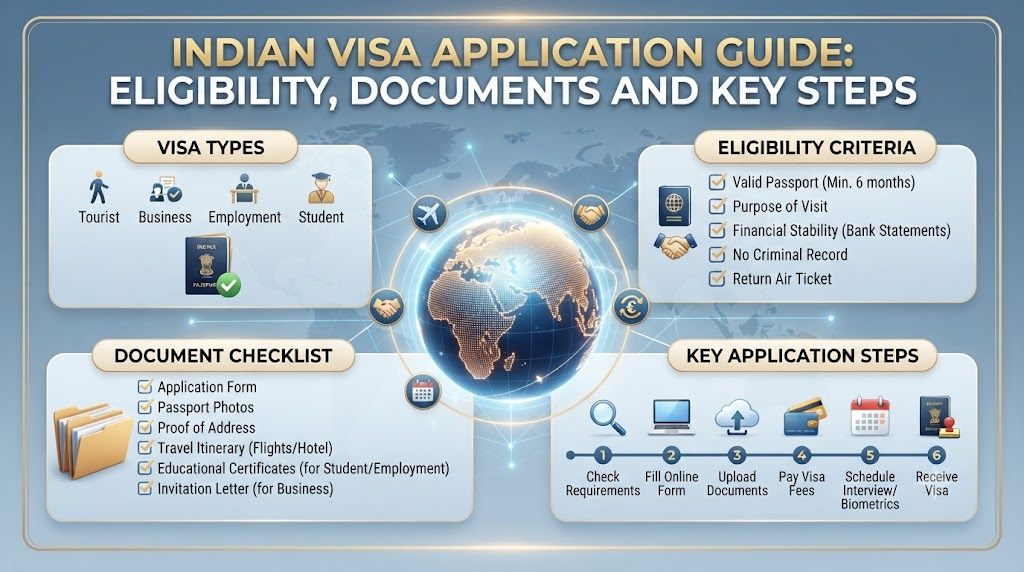
When an international corporation hires overseas talent, the business team celebrates an operational win, but the global mobility and corporate immigration team enters high-compliance mode. From an enterprise and sovereign audit perspective, an employment agreement is not an immigration document; it is simply commercial intent. National immigration authorities review every filing through statutory risk-assessment models, national labor protection rules, and evidentiary thresholds. For skilled Indian candidates, understanding how cross-border hiring works behind corporate doors transforms an opaque bureaucratic ordeal into a clear, manageable legal project. Approaching this process with an auditor’s attention to detail ensures your transition from Indian corporate payroll to an international desk proceeds without regulatory friction.
Deconstructing Corporate Sponsorship Frameworks
In the realm of global mobility, immigration frameworks are designed to balance economic demand against domestic labor protections. National border agencies place substantial legal and financial liabilities directly on petitioning corporations.
Most major global immigration systems operate under two distinct statutory structures:
- Closed Employer-Sponsored Systems: The enterprise acts as your legal guarantor. To bring in an Indian professional, the company must maintain a registered corporate license, demonstrate that hiring foreign personnel will not depress regional wages, and notify the government if your employment changes. Well-known examples include the UK Skilled Worker route, the US H-1B and L-1 systems, and standard European national employment permits.
- Open Market Work Authorizations: These frameworks grant general labor access without tying the individual to a single petitioning corporate entity. They are generally reserved for trailing spouses of specialized expatriates, regional working holiday programs, or post-study international graduates.
Recognizing these structural differences clarifies corporate decision-making. When a company hesitates or takes weeks to review a candidate’s background, it is rarely personal; they are conducting mandatory due diligence to protect their corporate sponsorship license.
The Legal Pillars of Skilled Visa Eligibility
Immigration adjudicators make determinations based on documentary evidence rather than corporate enthusiasm. Every approved petition must satisfy specific statutory criteria:
- Licensed Entity Standing: The hiring organization must maintain an active, unblemished corporate immigration sponsorship license. Entities without active municipal registrations or licensed status cannot sponsor foreign personnel.
- Strict Occupational Taxonomy: Your role must align with the destination nation’s formal occupational classifications. Mobility specialists must prove that your actual day-to-day duties match these standard definitions, regardless of creative internal job titles.
- Prevailing Wage Compliance: Statutory minimums are strictly enforced to prevent foreign workers from undercutting local talent. If your contracted compensation falls short of legal minimums or regional industry averages, immigration software will flag the petition for rejection.
- Verified Academic Credentials: The candidate’s Indian academic credentials must undergo third-party equivalence evaluations to confirm they match the host country’s degree standards.
- Unbroken Career and Tax Trails: Immigration officers verify past employment by examining secondary, tamper-proof paper trails, including continuous tax statements, social security filings, and bank deposit records.
- Medical and Statutory Clearances: Applicants must clear security background checks and mandatory medical examinations to ensure they pose no public health or safety concerns.
Cross-Border Skilled Pathways Matrix
| Country | Anchor Corporate Route | Corporate Sponsorship Burden | Language Verification | Standard Initial Validity | Direct Transition to Settlement |
| United Kingdom | Skilled Worker Route | Mandatory (Home Office Licensed) | SELT Assessment Required | Up to 5 Years | Eligible after 5 continuous years |
| Germany | EU Blue Card Framework | Mandatory (Recognized Contract) | Role-Dependent | Up to 4 Years | Fast-track eligibility in 21–27 months |
| Canada | LMIA Employer Permit | Mandatory (Positive Labor Test) | Standardized CLB Testing | 1 to 2 Years | Generates Express Entry points |
| Australia | Skills in Demand Route | Mandatory (Approved Business Sponsor) | Standardized Testing Required | 2 to 4 Years | Direct Employer Nomination options |
The Evidentiary Dossier Checklist
Immigration audits require clean, consistent paperwork. Global mobility specialists assemble detailed document portfolios before ever touching a consular portal:
- Primary Identity Records:
- Clean, valid Indian passport with at least six months of remaining validity and multiple blank visa pages.
- Archival copies of prior international travel passports, expired visas, and official border stamps.
- Consular-spec biometric facial photographs taken against neutral, non-reflective backdrops.
- Enterprise & Sponsorship Documentation:
- Formal employment contract signed by corporate officers detailing salary, responsibilities, and benefits.
- Official Certificate of Sponsorship, labor market approval document, or approved petition notice.
- Verified corporate registry extract proving the sponsor is a legitimate, tax-paying domestic enterprise.
- Academic Equivalence Dossier:
- Original degree scrolls, semester-wise transcripts, and official university grade sheets.
- Formal credential evaluation report from an authorized assessment body confirming degree comparability.
- Recognized professional licenses or technical board registrations where mandated by law.
- Corporate Experience & Fiscal Verification:
- Formal experience letters on company letterheads detailing specific technical duties and employment dates.
- Consecutive monthly pay slips, bank statements showing salary credits, and annual Form 16 or income tax filings.
- Relieving letters and documented resignation acceptances from every past employer.
- Statutory Clearances:
- Language evaluation test results issued by an approved provider.
- Regional Police Clearance Certificate issued through the Passport Seva Kendra under the Ministry of External Affairs.
- Official medical screening certificates issued by an authorized panel physician.
The Corporate Relocation and Application Lifecycle
Securing work authorization follows a strict procedural sequence. Skipping steps or filing paperwork prematurely creates administrative roadblocks that can delay start dates by months.
- Strategic Corporate Placement: Secure an offer with a business that holds the legal status and corporate infrastructure required to sponsor international workers.
- Corporate Petition and Labor Filings: The employer’s immigration counsel performs mandatory domestic labor searches and submits preliminary petitions to government agencies.
- Portfolio Audit and Preparation: The candidate gathers, certifies, and translates all personal, academic, and professional evidence.
- Filing the Digital Dossier: Submit the visa application via the destination country’s immigration portal, ensuring every entry matches official records exactly.
- Paying Regulatory Charges: Remit all required government processing fees, biometric charges, and mandatory healthcare levies.
- Biometric Enrollment and Consular Interview: Complete fingerprinting and digital imaging at an authorized visa processing center, attending an interview if requested.
- Visa Grant and Compliance Review: Review the approved visa vignette or digital status notice to verify start dates, travel windows, employer bindings, and family permissions before booking travel.
Financial Planning and Global Mobility Budgeting
Relocating across borders requires realistic budgeting. Moving expenses extend far beyond base visa fees, requiring substantial financial reserves to bridge the transition.
- Statutory Filing Charges: Government processing fees range from several hundred to over a thousand dollars. Certain jurisdictions also require significant upfront healthcare surcharges covering the entire visa duration.
- Pre-Departure Administrative Costs: Budget for English proficiency exams, credential equivalence reports, consular-certified translations, background checks, and medical screenings.
- Settlement Reserves: Plan for one-way international airfare, short-term housing for your initial weeks abroad, significant rental deposits (often several months’ rent upfront), and living expenses while your local bank account is set up.
- Processing Lead Times: Most online skilled worker applications take between 4 and 12 weeks post-biometrics. However, if your pathway requires preceding domestic steps like labor market tests or annual quota lotteries, the overall timeline can run from 3 to 8 months. Maintain your current Indian position until your work visa is officially stamped and validated.
Regulatory Restrictions and Family Dependents
Holding an overseas work permit comes with strict legal parameters. Maintaining lawful status requires adhering to these operational limits throughout your stay.
- Tied Employment Parameters: Most sponsored work visas legally connect your residency to a single corporate sponsor. If that relationship terminates, immigration law grants a brief grace period—typically 30 to 60 days—to find an authorized replacement sponsor, adjust your visa status, or leave the country.
- Moonlighting and Secondary Commercial Activity: Sponsored visas generally prohibit secondary consulting, freelancing, or independent business ventures unless explicitly authorized under separate exemptions.
- Dependent and Spousal Rights: Most skilled categories allow you to bring your legal spouse and minor children, but spousal work permissions depend on local law. Some countries allow open spousal employment, while others require the partner to find their own independent corporate sponsorship.
- Long-Term Settlement Pathways: A temporary work visa is an entry permit, not permanent residency. However, maintaining steady employment, paying local taxes, and complying with all visa conditions provides a reliable foundation for applying for permanent residency later on.
Avoiding Critical Compliance Pitfalls and Scams
Skilled Indian applicants frequently encounter administrative delays or fall prey to fraudulent schemes due to simple misunderstandings of the process.
- Discrepancies in Career Records: Mismatches between your resume, reference letters, tax filings, and online profiles trigger automated fraud alerts and prolonged processing delays.
- Vague Reference Letters: Submitting reference documents that outline generic executive buzzwords rather than specific technical duties makes it difficult for visa officers to confirm your occupational category.
- Paying for Job Offers or Sponsorship: Authentic international companies cover their own legal sponsorship expenses. Any agency demanding fees for an offer letter, sponsorship certificate, or visa slot is running a scam.
- Submitting Inaccurate Documents: Presenting inflated experience claims, altered pay slips, or unaccredited degrees can lead to multi-year visa bans that affect applications to other countries as well.
- Ignoring Host Country Rules: Assuming that entering on a work visa grants total civic freedom can cause serious compliance issues. Always follow local registration rules and reporting timelines.
Practical Corporate Application Scenario
Consider a cloud systems architect based in Bengaluru who accepts an offer from an enterprise software firm in Dublin, Ireland.
Instead of resigning immediately, the architect works with the firm’s global mobility team to file for an Irish Critical Skills Employment Permit through the Department of Enterprise, Trade and Employment.
The architect gathers degree certificates, submits them for official verification, and obtains a clear Police Clearance Certificate via the Passport Seva Kendra.
Once the Irish labor department approves and issues the formal Employment Permit, the architect submits an employment visa application through the online immigration system, books a biometric appointment at a regional visa application center, and submits their complete, verified dossier.
Only after the physical entry visa is stamped into their passport does the architect provide notice to their current employer in India, book flights to Dublin, and finalize initial temporary accommodations.
Key Takeaways
- An overseas job offer establishes hiring interest, but you cannot work legally until an official work visa is granted.
- Sponsored work visas demand active corporate backing, compliant job classifications, and salary figures that meet statutory minimums.
- Keep your employment history, tax filings, and educational credentials consistent and documented across all submissions.
- Budget for indirect expenses, including upfront healthcare surcharges, credential verifications, and overseas rental deposits.
- Keep your current job in India until your entry visa or work permit confirmation is officially in hand.
- Avoid recruiters who charge upfront placement or visa sponsorship fees.
- Rely on official destination government portals or accredited legal professionals for current immigration requirements.
Frequently Asked Questions
Can an Indian professional convert a tourist visa to a work visa while overseas?
In most jurisdictions, visitors on tourist visas cannot legally switch to a work permit in-country. While attending preliminary job interviews as a tourist is generally allowed, you must return to India to file your formal work visa application through the proper embassy or consular channels once an offer is finalized.
What is the functional difference between an employment permit and an entry visa?
An employment permit is an internal authorization issued by a labor department granting an overseas national the right to take up domestic employment. An entry visa is a physical travel document placed in your passport by an embassy or consular mission permitting you to travel to and enter the host country to perform that work.
Can dependent family members work legally under a skilled visa category?
Dependent spousal work privileges depend on the destination’s domestic laws. While certain countries grant open work permits to spouses of skilled professionals, other jurisdictions restrict spousal employment or require the dependent to secure independent, employer-sponsored authorization.
What occurs if a foreign employer terminates a sponsored employee’s contract?
If employment ends prematurely, immigration authorities typically initiate a statutory grace period ranging from 30 to 60 days. Within that window, the worker must secure alternative licensed corporate sponsorship, transition to another valid immigration category, or make arrangements to depart the country.
What level of financial reserves must an Indian applicant demonstrate for a work visa?
Financial requirements vary by destination. Some governments require applicants to show a specific balance—often between $1,500 and $4,000 equivalent—held continuously for 28 to 90 days to prove initial self-sufficiency, unless the sponsoring employer officially certifies maintenance on the sponsorship document.
Are standardized language assessments mandatory for skilled professionals?
Most English-speaking nations mandate approved examinations such as IELTS or PTE Academic to verify workplace readiness. Non-English-speaking countries often waive formal testing for highly skilled international roles, although learning the local language remains essential for day-to-day integration and permanent settlement.
Does working overseas on a temporary visa guarantee permanent residency?
A work visa is a temporary permit and does not guarantee permanent settlement. However, maintaining continuous lawful employment, paying local taxes, and complying with visa conditions makes you a strong candidate for permanent residency pathways down the road.
Why do work visa applications get rejected for Indian applicants?
Frequent rejection causes include discrepancies in past tax and employment records, salaries falling below statutory thresholds, unlicensed sponsors, incomplete background checks, or an inability to demonstrate that your skills match the target occupational code.
How can an Indian professional distinguish authentic foreign job offers from fraudulent schemes?
Authentic foreign employers maintain verifiable corporate domains, clear business registrations, and formal interview processes. Legitimate companies cover their own sponsorship costs and will never ask a candidate to transfer money into private accounts for placement or visa processing.
What is the realistic processing duration for a skilled international work visa?
Direct visa processing typically takes between 4 and 12 weeks following biometric enrollment. However, if your pathway requires prior steps like localized labor testing or quota lotteries, the entire process can take anywhere from 3 to 8 months.
Conclusion
Securing an overseas work visa is a corporate legal process that demands careful preparation, technical precision, and an understanding of regulatory compliance. By looking at your application the way an enterprise mobility team and consular officer do—verifying corporate credentials, aligning occupational codes, and presenting consistent identity, tax, and employment records—Indian professionals can navigate international relocation with clarity. Take the time to review destination-specific rules, steer clear of questionable recruitment offers, and establish a realistic timeline that accounts for document gathering, background checks, and initial settlement costs. Approaching the journey methodically turns an international job offer into a rewarding, legally secure career abroad.
Leave a Reply