Drone Buying and Hiring on a Budget: A Smart Spender’s Guide

October 1, 2026 · 14 reads
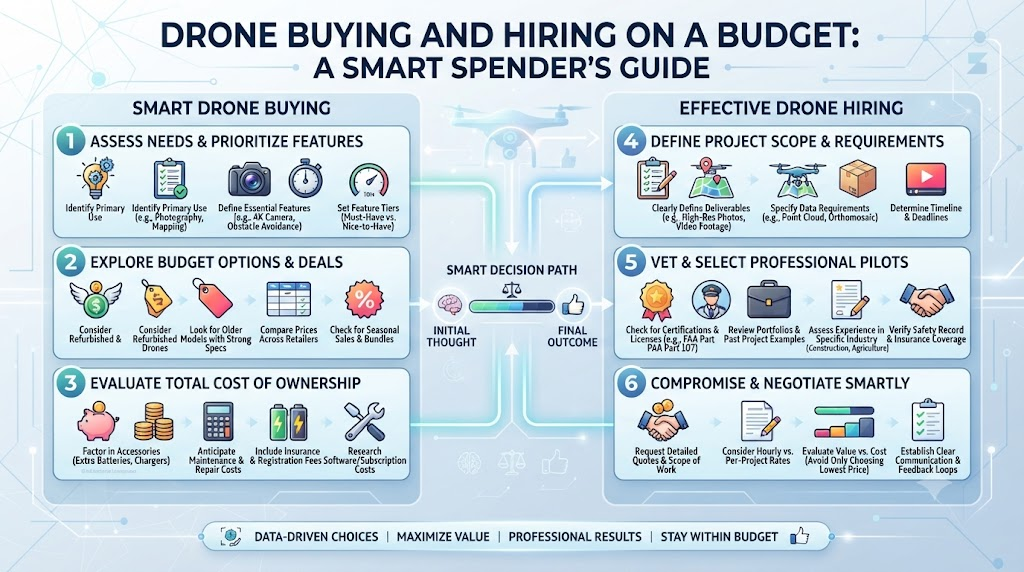
Money gets wasted fast in the drone world. A buyer picks a model that looks cool, then finds it cannot do the job. A business owner hires a pilot with a low price, then pays twice to fix poor work. Sound familiar? Both stories start the same way. People rush because they feel unsure. Gear lists look scary. Pilot ads all sound the same. Rules feel strict and unclear. So finding reliable gear and licensed operators feels like a heavy task. This guide takes a smart spender’s view. You will learn where your money should go and where it should not. You will also meet DronesBee.com, an open drone research and service platform. It helps you learn first and spend later. Let us save you some cash and stress.
What Is DronesBee.com?
Picture DronesBee.com as a help desk for the drone world. It works as an open discovery hub and drone directory. It never pushes a sale. Here is what you will find:
- A model database with clear, simple facts
- A verified directory of pilots and service teams
- Easy guides on gear, rules, and common jobs
- Practical tips that help you plan before you spend
Picking the Right Flying Machine
Money goes furthest when you match the drone to the task. First, count your flight minutes. A drone with short flights burns your time. Next, study the camera sensor. Better sensors give cleaner shots, even at dusk. Then check what the battery can really do. Cold days and strong wind shrink it. Before you pay, read drone reviews from owners who used the model for months. Their notes reveal hidden costs. Many buyers hunt for the best drones. But the best drone for a wedding studio will not suit a farm. Pick for your job, not for the crowd.
Evaluating Hardware Side by Side
Next, put your top picks in a drone comparison chart. A simple chart exposes weak spots fast. Check payload capacity first. This number tells you how much weight the drone lifts. Then check range. Wide sites need a strong signal. After that, review obstacle sensing. Good sensors protect your investment near poles, trees, and walls. Study the drone specifications for every model. Compare each number with your real needs. Skip claims that have no numbers behind them. Cheap drones often hide their limits in the small print.
Table 1: Drone Selection and Buying Factors
| Key Factor | What to Look For | Common Buying Trap | Why It Matters |
|---|---|---|---|
| Flight Minutes | Long flights with easy battery swaps | Trusting the best-case claim | Short flights waste paid hours |
| Camera Quality | Large sensor and steady gimbal | Judging by megapixels alone | Clean visuals win more clients |
| Signal Strength | Stable link far from the pilot | Skipping a range test | A lost signal means a lost drone |
| Crash Sensors | Sensors on every side | Buying a model with few sensors | Sensors cut repair bills |
| Carry Weight | Room for tools and extras | Loading a drone too heavy | Extra weight shortens flights |
| Repairs and Parts | Spare parts and a clear support plan | Forgetting repair costs | Downtime drains your budget |
Hiring Professional Help for High-Stakes Jobs
Saving money does not mean doing everything yourself. Some jobs cost more when you fly them alone. A fall from a roof or a fine for breaking a rule can wipe out any savings. So hire a licensed expert for risky or rule-heavy work. Quality drone services bring skilled pilots, backup gear, and insurance. Many owners type drone pilots near me into a search bar. Then they feel stuck with too many choices. Use a verified directory to cut the noise. Next, check each pilot’s license and past jobs. Finally, ask for a written quote.
Capturing Stunning Media from Above
Great visuals earn back their cost. A sharp flyover can help a home sell faster. A wedding film from above makes memories feel grand. A brand video builds trust in a new store or resort. Strong aerial photography services plan the flight path, light, and timing before takeoff. Always watch a sample reel first. Look at smooth motion, true color, and neat framing. Then ask how many edited clips you will get.
Mapping Land and Job Sites Accurately
Land projects burn cash when plans use old data. Drone surveying services fix that problem. A drone flies a set grid and takes hundreds of photos. Software stitches them into a 3D map. GPS sensors tag each point with its exact spot. Builders then measure slopes, piles, and distances on screen. Land developers spot errors early. Early fixes cost far less than late ones. Drone surveying services also trim hours of walking in the field.
Checking Hard-to-Reach Infrastructure Safely
Sending workers to climb costs time and risks lives. Drone inspection services offer a safer path. A pilot flies near power lines, wind turbines, bridges, and building roofs. The camera zooms in on cracks, rust, and loose bolts. Engineers read the images from the ground. Nobody hangs from a rope. Reports arrive quickly, so repairs start sooner. Safer work and faster fixes both protect your budget.
Modern Farming from the Air
Every dry patch and weak plant costs a farmer money. Agricultural drone services help find them early. A drone crosses a field in minutes. Its camera shows plant health. Moisture maps reveal where water runs short. Some drones spray only the problem zones. That means less product and less waste. Farmers act sooner, and small issues stay small.
Table 2: Commercial Drone Services Comparison
| Service Type | Typical Equipment | Main Business Benefit | Safety Check Needed |
|---|---|---|---|
| Aerial Photography | Camera drone with steady gimbal | Strong visuals that build trust | Permit and clear space near people |
| Surveying | GPS drone with mapping software | Fast, exact site measurements | Ground markers and data review |
| Inspection | Zoom or heat camera drone | Lower risk and lower labor cost | Safe gap from live wires |
| Agricultural | Crop camera or spray drone | Healthier crops with less waste | Wind check and spray rules |
Real-Life Scenarios
- A small hotel owner needs a promo video. She hires a licensed pilot with a steady camera drone. The film shows the pool, garden, and beach, and bookings grow.
- A construction manager must measure gravel piles each month. He books a surveying pilot with GPS gear. The 3D maps replace days of slow, manual counting.
- A wind farm manager worries about blade damage. She orders a drone check instead of a rope team. The images show tiny cracks, and her crew fixes them early.
8 Common Mistakes to Avoid
- Paying for a drone you cannot fly well. Start with an easy, stable model. Upgrade after you build real skill.
- Hiring without checking insurance. Ask to see the policy paper. Walk away if the pilot cannot show it.
- Skipping local permits. Call your aviation office early. Wait for approval before takeoff.
- Ignoring the weather forecast. Check wind and rain each morning. Move the job when the sky looks wrong.
- Trusting ads over real owners. Read feedback from people who bought the model. Look for repeat praise and repeat complaints.
- Forgetting running costs. Add batteries, spare parts, and software fees to your plan. Then you will see the full price.
- Taking the lowest quote without questions. Ask three pilots for offers. Compare skill, gear, and past work.
- Booking without seeing sample work. Ask every pilot for a short portfolio. Choose the one whose style fits your goal.
The 7-Step Drone Planning Process
Treat this as your spending plan: Goal → Search → Shortlist → Compare → Ask → Verify → Decide.
First, set your goal and your budget. Next, search for drones and pilots that fit. Then shortlist your best three. Compare them on cost, gear, and skill. Ask each one the same clear questions. Verify licenses, insurance, and past work. Finally, decide and book with confidence.
Frequently Asked Questions
Question 1: How can DronesBee.com help me save time?
DronesBee.com puts drone research in one place. You can read simple guides, browse a database, and explore a verified pilot directory. That saves hours of random searching. The platform acts as an honest discovery hub, not a pushy store. So you learn first, compare calmly, and contact pilots only when you feel ready.
Question 2: What budget should a beginner set?
Set a budget for more than the drone. Add batteries, a case, spare propellers, and a memory card. Also add money for training and registration. Many beginners spend most of their cash on the drone and then cannot afford extras. Plan for the full kit, and choose a simple model that leaves room for practice and repairs.
Question 3: Which matters more, the camera or the flight time?
It depends on your job. Photo and video work needs a strong camera. Mapping and inspection need longer flights and steady GPS. Many beginners chase camera numbers and forget battery life. A great camera is useless when the drone lands every ten minutes. So balance both, and read owner feedback to see real results.
Question 4: Do I need insurance for my drone?
Insurance protects you when something goes wrong. A crash can hurt a person or damage property. Repair bills can climb quickly. Some places require coverage for paid work. Ask your local aviation office and an insurance agent. When you hire a pilot, ask for proof of coverage, so you never pay for their mistake.
Question 5: How can I find drone pilots near me without wasting time?
Skip long random searches. Open a verified directory and filter by city and job type. Read each profile and look at sample work. Shortlist three pilots. Then send each one the same short brief. Compare their answers, prices, and timelines. A pilot who replies clearly and quickly usually runs a tidy, honest business.
Question 6: Why do aerial shoots cost different amounts?
Price depends on time, place, and extras. A short shoot in an open area costs less. A long shoot with editing and permits costs more. Travel and special gear add to the bill. Ask each pilot what the quote includes. A clear quote lists flight time, edited clips, and delivery date.
Question 7: Can drone surveys replace ground crews?
Drone surveys cover large areas fast, but they do not replace every ground task. Crews still place markers and check key points. Together, drones and crews give strong results. The drone gathers wide data in one flight. The crew checks it on the ground. This mix saves time while keeping the numbers reliable.
Question 8: What can a drone find on a roof?
A drone can spot cracks, loose tiles, water stains, and rust. A heat camera can also show hidden leaks. Owners get clear photos without a ladder. They can then plan repairs and share the images with the repair team. This keeps people safe and also helps them get quotes that match the real damage.
Question 9: How often should I order a drone inspection?
It depends on the asset. Busy sites may check every few months. Roofs may need one check a year and another after a storm. Wind turbines and power lines follow set safety plans. Ask your engineer or the pilot for a schedule. Regular checks catch small damage early, which keeps repair bills low.
Question 10: Do spray drones need special training?
Yes, spraying needs extra skill. Pilots must learn about tank loads, wind limits, and safe spray paths. Many places also ask for special permits. Always check the rules before you book. Ask your pilot for proof of training and past farm work. Good records show that the pilot treats crops and nearby areas with care.
Question 11: What should a drone service agreement include?
A good agreement lists the job, the date, and the price. It also names the deliverables, such as maps, photos, or reports. It states who holds the rights to the files. It covers weather delays and cancel rules. Read every line before you sign. If a point feels unclear, ask the pilot to explain it in plain words.
Question 12: How can I keep my drone safe on every flight?
Run a quick check before each flight. Charge batteries, inspect propellers, and update the software. Check the weather and the local flight rules. Pick an open spot away from crowds. Keep the drone in sight. Land early when the battery runs low. These small habits prevent most crashes and protect both people and your wallet.
Conclusion
Smart drone choices save money, time, and worry. Set your goal first. Match the drone or the pilot to that goal. Read honest feedback and check every number. Ask for proof of license and insurance. Follow local rules on every flight. Respect the weather, because safety always beats speed. Remember, a cheap shortcut often turns into an expensive lesson. Take your time and ask plenty of questions. When you want a calm place to start, explore DronesBee.com for guides, drone facts, and verified pilots. You do not need to be an expert to choose well. You only need a clear plan and a few good habits. Start today, and enjoy a safe and successful flight.
Leave a Reply