Certified Drone Pilots in India: How to Hire a Safe and Legal Expert

October 3, 2026 · 21 reads
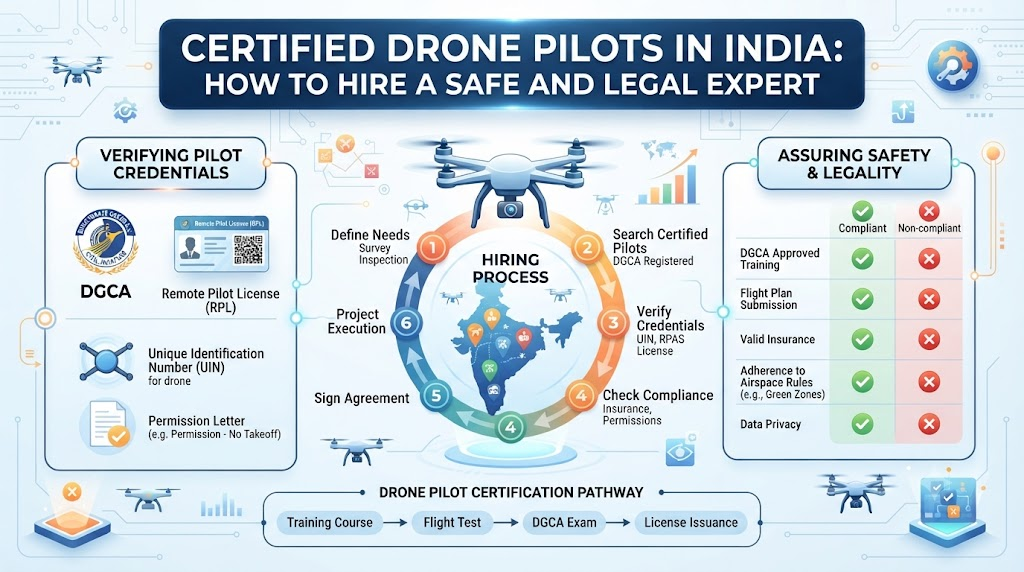
New flying machines create fresh job and business chances all over India. People feel happy when they see drones work in farms and cities. Yet rules, costs, and papers often confuse first-time users. Buyers want clear price tips. Students seek training paths. Owners need safe pilots for projects. This guide shares easy steps for everyone. It covers local rules, smart buying, and career starts in plain words. You learn how to fly safe and stay legal. DronesNow.in serves as a calm discovery hub. It lists models, training spots, and checked pilots in one spot. Readers explore choices without pressure. The aim is wise picks that fit your goals and money.
What is DronesNow.in
DronesNow.in acts as an open discovery hub for the Indian drone space. It guides buyers, learners, and firms toward basic facts. First, the site shows many drone models with plain details. Second, it points to DGCA approved training spots. Third, it holds a list of checked pilots. Fourth, users can weigh services for varied tasks. The platform stays easy to use. People search, pick options, and choose with more trust. It never forces sales. It only supports discovery.
Exploring the Indian Drone Landscape
Interest in drones in India rises fast each year. More farmers, builders, and film teams adopt them. Young adults spot new work routes. Towns need maps and checks. Villages need crop care. Aviation rules keep the sky safe. Daily curiosity grows as prices fall and tools improve. Local makers join the market too. This helps people find and use drones with less trouble. Teams now plan tasks with flying machines instead of slow old ways.
Finding the Right Machine for Your Budget
Begin with flight time checks. Longer air time covers wider areas. Then study camera clarity. Sharp images aid maps and clips. Battery strength counts as well. Solid batteries cut stop times. Weigh these points when you seek the best drones in India. Costs shift with added features. Review the drone price in India before any buy. Link the machine to your main task. A farmer needs spray gear. A film team needs steady video. Try basic controls when you can. Hold the budget firm. Extra items can push the total higher.
Smart Tips When Shopping Remotely
Warranty handles repairs for a fixed span. Always confirm the full length. Spare parts must stay simple to source. Nearby help matters later. Study seller standing through earlier buyers. Delivery checks guard your cash. Open the package and test basic moves at once. When you buy drones online India, stay alert with sellers. Skip offers that seem too low. Make sure the model fits Indian rules. Save every paper for later use.
| Buying Factor | What to Look For | Common Buying Trap | Why It Matters |
|---|---|---|---|
| Flight Time | At least 25 minutes | Weak battery life | More work without pauses |
| Camera Quality | Clear 4K or higher | Blurry images | Sharper maps and clips |
| Battery Pack | Extra packs included | Single battery only | Fewer breaks in field |
| Local Support | Easy spare parts | No help nearby | Fast repairs when needed |
| Rule Fit | DGCA ready model | Foreign model without papers | Legal flights only |
Stepping into a Professional Flying Career
Aviation rules call for proper pilot licenses for paid tasks. Training builds safe control and sky knowledge. Learners master ground tests and flight plans. This route unlocks roles in many sectors. Begin with basic theory. Move next to real air hours. Solid training grows trust in yourself. Many young adults pick this path for steady income. The steps need steady focus and practice. Right papers guard both flyer and client.
Selecting an Approved Aviation Academy
Seek DGCA approval at the start. Approved spots follow national rules. Flight simulators let you practice without danger. Hands-on field hours grow true skill. Government papers prove your level. Choose centres that give DGCA certified drone pilot training. Weigh drone training institutes in India by place and course time. Ask about success rates and job links. Visit when you can. Speak with past learners. Select a spot that fits your time and money.
Hiring Licensed Flying Experts for Businesses
Firms need legal and insured pilots for paid work. Certified drone pilots in India hold proper papers. They know air rules and safety moves. Insurance covers loss or harm. Hiring trained flyers lowers risk. Companies gain clear outcomes and calm minds. Check the pilot’s license before any task. Request past work samples. A skilled pilot plans the flight and respects all limits. This keeps jobs smooth and legal.
Commercial Support Across Industries
Many fields now turn to flying machines for better results. Real estate groups capture clear site videos. Builders draft height maps for plans. Mining teams scan wide zones quickly. Rescue units check tough spots after storms. Drone services in India meet these needs. Every task follows safety rules. Clients receive data without heavy ground effort. The right pilot and machine match the work. This cuts time and cost for firms.
Modern Farming and Crop Management
Farmers send flying machines to spray fertilizers evenly. Soil views from above reveal dry or weak patches. Crop health scans catch disease early. Agricultural drone services India lift farm yields. Pilots fly low and steady over land. They finish large areas in short spans. Farmers book these services for key seasons. The method uses less water and chemicals. Outcomes arrive faster than hand methods. Safety rules still hold near people and roads.
| Service / Path | Main Skill or Gear | Common Industry | Safety Rule to Follow |
|---|---|---|---|
| Crop Spraying | Spray system drone | Farming | Keep clear of people |
| Site Mapping | High camera drone | Construction | Fly only in allowed zones |
| Event Video | Steady camera gear | Media | Respect height limits |
| Pilot Training | Simulator and field hours | Career path | Follow DGCA rules |
| Survey Work | Long flight battery | Mining | Check weather first |
Real-Life Scenarios
- A college learner joins a DGCA academy. He finishes theory and field hours. Then he takes small survey jobs near his town.
- A farmer books crop sprayers for his wheat land. The pilot covers the field in one morning. The farmer notes better growth next month.
- A media crew films an outdoor wedding. They hire a licensed pilot. The drone takes smooth shots from safe height.
8 Common Mistakes to Avoid
- Flying in red zones without permission.
Always study the map first. Gain clearance before takeoff. - Buying unapproved foreign drones without UIN.
Select models that meet Indian rules. Register the machine correctly. - Training at uncertified centres.
Choose only DGCA approved spots. Confirm the paper before you join. - Flying without insurance.
Buy cover for the drone and others. It guards against loss. - Skipping weather checks.
Study wind and rain before flight. Bad weather leads to crashes. - Ignoring ground checks.
Test motors and battery every time. Small faults grow in air. - Hiring pilots without papers.
Request license and insurance proof. Work only with certified people. - Using one battery for long jobs.
Carry spare batteries. Plan stops for safe changes.
The 7-Step Drone Planning Process
Use this clear path for any drone choice.
Goal: Set your main need first.
Search: Scan options on DronesNow.in and other open sources.
Shortlist: Select three or four matches.
Compare: Weigh flight time, price, and support.
Ask: Speak with sellers or trainers.
Verify: Confirm papers and reviews.
Decide: Pick the best fit and begin.
Frequently Asked Questions
Question 1: Do I need a license to fly a small drone for fun?
Yes, most drones above a basic weight need registration. Fun flying still follows height and zone rules. Check local maps before every flight. Keep the machine away from airports and crowds. Simple rules keep everyone safe.
Question 2: How much does basic drone pilot training cost in India?
Costs usually start from a few thousand rupees for short courses. Full DGCA paths cost more because of flight hours. Compare institutes for exact fees. Some places offer payment plans. Ask about what the fee includes.
Question 3: What is UIN and why does my drone need it?
UIN means Unique Identification Number. Every drone above a set weight must have it. The number links the machine to its owner. Without UIN, flying can bring fines. Register through the official portal.
Question 4: Can farmers use drones without a pilot license?
Paid spraying needs a licensed pilot. Farmers can own the machine but hire trained people for work. Rules protect air safety. Check local advice before any spray job.
Question 5: How long does DGCA certified training take?
Most courses run from a few days to a few weeks. Theory comes first. Then students complete flight hours. The exact time depends on the institute and schedule. Plan leave from work if needed.
Question 6: Are online drone courses enough for a license?
Online theory helps, but real flight hours stay required. DGCA needs hands-on practice. Mix online study with field training at an approved centre. Full certs need both parts.
Question 7: What happens if I fly without insurance?
You risk paying for any damage yourself. Insurance covers the drone and third-party loss. Many jobs demand proof of cover. Buy it before commercial flights.
Question 8: How do I find certified drone pilots near me?
Search directories that list verified names. Ask for license copies and past work. Talk to the pilot about the job needs. Confirm insurance before the flight day.
Question 9: Can I buy any drone from abroad and fly it here?
Only models that meet Indian rules work freely. Some foreign machines need extra papers or fail checks. Prefer local or approved options. Register the drone after purchase.
Question 10: What zones stop drone flying completely?
Red zones near airports, borders, and key sites stay banned. Yellow zones need permission. Green zones allow free flight under height limits. Always check the official map app.
Question 11: Do agricultural drones need special permits?
Yes, spray work needs both pilot license and often local farm permits. Follow chemical rules too. Book only trained pilots who know these steps. Safety comes first near crops and people.
Question 12: How can businesses start using drone services safely?
Hire only certified and insured pilots. Set clear job goals and zones. Check weather and papers before every flight. Keep records of the work. This keeps projects legal and smooth.
Conclusion
The Indian drone space brings real chances for buyers, learners, and firms. Safe flying and legal steps protect all. Wise research brings better outcomes. Match the machine or training to your exact need. Follow the rules every time. Check weather, zones, and papers before takeoff. DronesNow.in stays a simple discovery hub for models, institutes, and pilots. Use it to explore options with quiet confidence. Begin small, stay careful, and build your skills step by step.
Leave a Reply