Find a Great Event or Host One on MyEventsNow EU

November 3, 2026 · 15 reads
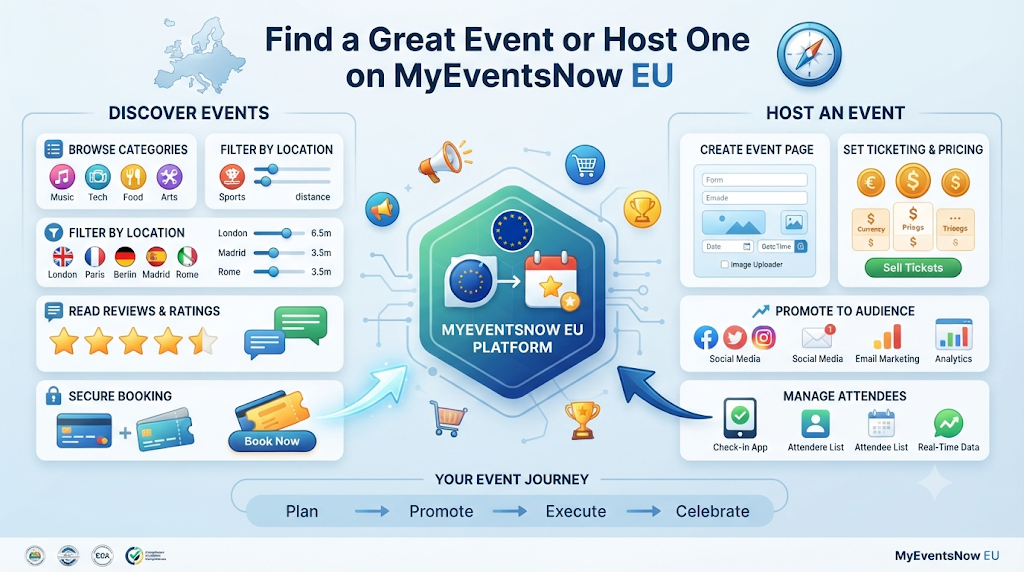
A student has three exams, a part-time job, and exactly one free evening. She wants to use it well. Maybe a talk that helps her future career, or a night of live music to clear her head. What she does not want is ten open tabs. Across the city, a small group is planning a gathering and wants to be found. Both need the same simple thing: one place to look and one place to list. MyEventsNow EU is built for that. It is a European marketplace where people discover events, book tickets online, and manage event details. This article shows the marketplace from both seats, first as a busy attendee and then as an organizer.
A Simple Picture of MyEventsNow EU
Think of MyEventsNow EU as a busy town square for events across Europe. Organizers, venues, businesses, and attendees all meet there.
If you want to go to an event, you can look through the listings, read the facts, and pick a ticket. If you run an event, you can show it to people, offer places, and keep track of who signs up. In short, it works as a place for Online Event Ticket Booking Europe on one side and an Event Ticketing Platform Europe on the other.
The mix of events is broad. You may see music shows, tech meetups, business events, cultural celebrations, networking nights, and community activities. Each city has its own mix, so a quick check of each listing always helps.
Many kinds of people use a marketplace like this. Locals look for weekend plans. Tourists want something to do on a short trip. Students look for useful talks and workshops. Professionals look for people to meet. On the other side stand independent organizers, event agencies, venues, training providers, businesses, and community groups. All of them can find each other in the same place.
Two Views, One Marketplace
Here is a quick way to compare what each group gets. Each heading pairs a guest view with a host view.
- Main purpose
- Attendees: Find experiences and book a place
- Organizers: Reach people who may want to attend
- Finding or sharing events
- Attendees: Look through events that are coming up
- Organizers: Create listings and post schedules
- Tickets
- Attendees: Select tickets that suit them
- Organizers: Set ticket categories and offer options
- Sign-ups and bookings
- Attendees: Book a spot
- Organizers: Manage bookings and watch registrations
- Event details
- Attendees: Read the facts before choosing
- Organizers: Manage event information
- Extra features
- Attendees: Venue exploration, language support, community engagement
- Organizers: Event promotion and the same shared extras
Read the list in pairs. The first line under each heading shows what a guest does. The second shows what a host does in the same area. Tickets and bookings show up twice, because every sign-up has a guest on one end and a host on the other.
Part One: The Attendee Side, From Search to Seat
Start by looking around
Every good evening out starts with a look at what is on. A visitor can browse Upcoming Events in Europe and see music shows, tech gatherings, cultural celebrations, and more. Each listing carries event information, so you can decide if it suits your plans before you go further.
This helps people with little time most of all. A student can check a few listings in a short break. A tourist can scan options between meals. A local can find a fresh idea for a quiet Sunday.
Here is one tip. Start with a date, not a topic. Pick the day you are free, then see which listings fit it. That small switch cuts down the time you spend reading about events you cannot attend.
Two cities worth a closer look
Berlin and Paris are two places the marketplace highlights. Each one has its own flavour.
Berlin has a lively list. Searching Events in Berlin can bring up live concerts, technology conferences, professional meetups, and workshops. Nightlife experiences and entertainment shows are listed too, so a visitor can plan both a day and a night.
Paris tells a different story. Events in Paris include business conferences, cultural festivals, live music, and educational seminars. You may also find creative workshops and social gatherings, which suits people who like to mix learning with fun.
The list below shows what each city lists. “Not specified” means no detail was given, not that nothing exists.
- Concerts and live music
- Berlin: Live concerts
- Paris: Live music
- Business and technology events
- Berlin: Technology conferences, professional meetups
- Paris: Business conferences
- Workshops and seminars
- Berlin: Workshops
- Paris: Educational seminars, creative workshops
- Cultural and social activities
- Berlin: Not specified
- Paris: Cultural festivals, social gatherings
- Nightlife and entertainment
- Berlin: Nightlife experiences, entertainment shows
- Paris: Not specified
Whatever city you pick, open each event and check its schedule, venue, and ticket details before you decide.
Music nights, festivals, and DJ sets
Music is often the reason people book a trip. The marketplace lists performances, festivals, DJ events, and other live shows across European destinations. If you are searching for Concert Tickets Europe wide, you can start in one place and compare what is on.
This part helps festival fans, night owls, and friends who want a shared plan. It also helps people who are new to a city and do not yet know the music scene.
A quick tip: decide how much of your evening you want to give to the event. Then check the schedule to see if it fits. A short DJ night and a longer live show ask for different amounts of time, so it is better to know before you book.
Business events and networking nights
Work travel often leaves a free evening or a spare morning. That is a good time to learn something. The marketplace lists Business Conferences in Europe on technology, entrepreneurship, digital marketing, innovation, and industry development. Professional networking events are listed too.
This helps team leaders, freelancers, founders, and students who want to see a field up close. It also helps anyone who wants to meet people outside their own office.
Try this tip. Prepare a two-line introduction about yourself before you go. Say what you do and what you hope to learn. When you meet someone new, the words will come easily, and the talk will start sooner. Do check the schedule too, so the event sits well around your work duties.
Choosing your ticket with care
You have found an event you like. Now comes the ticket. With Online Event Ticket Booking Europe wide, the steps are simple. Open the listing, read the event information, and select a ticket from the options on offer. The organizer decides what the categories are, so choices differ from one event to the next.
This step helps solo guests, couples, and groups alike. Booking is the end of your search, so it deserves a calm look. A few minutes of care now can save a lot of trouble later.
Here is a tip. If two ticket categories look alike, read their notes line by line before you choose. Check whether tickets are still available too. If anything is unclear, go back to the event description and read it again.
Part Two: The Organizer Side, From Draft to Daily Care
Setting up your listing and ticket types
On any Event Ticketing Platform Europe, the listing is your front door. On MyEventsNow EU, organizers can create a listing, publish the schedule, set ticket categories, and manage event information. If plans change, they can update the details so guests see the right facts.
This helps new organizers who feel unsure at the start. It also helps experienced teams who handle many events and want one tidy place for each.
A simple tip: answer the two first questions every guest asks, which are “When?” and “Where?” Put those answers near the top of your listing. After that, add the rest of the story, such as who the event is for and what people will do.
One place for sign-ups and participant details
When sign-ups begin, careful records matter. A good Event Registration Platform Europe helps you see who registered, how many tickets remain, and which bookings are in. MyEventsNow EU keeps attendee registrations, ticket availability, booking records, and participant information in one central place. You do not need to hunt through old messages or loose notes.
Training providers can use this to know who is joining a class. Venues can see how full an event is. Small teams without an admin helper can save time.
Here is a tip. Look at your numbers a few days before the event, not only on the day. Early checks give you time to prepare the room, the materials, and any extra help.
Who can step in as a host
Do you want to List Your Event Online? The marketplace welcomes event agencies, venues, training providers, businesses, and community organizations. They can all promote activities to people who might want to attend. A company talk and a neighbourhood meeting can sit in the same marketplace.
This is good news for hosts who have a strong idea but no large crowd yet. A training provider can show its sessions. A venue can show what takes place under its roof. A community group can tell more people about its plans.
Try this tip. Put the two things that make your event special in the first lines of the listing. Readers often decide fast, so give them a clear reason to read on.
Offering tickets and following bookings
Organizers who wish to Sell Event Tickets Online can offer ticket options, manage bookings, and monitor registrations. The platform also helps them reach more people and expand their audience. No result is promised, but the tools are there to use.
This suits independent organizers with a small event as well as agencies with a busy year ahead.
A helpful tip is to give each ticket category a short, plain name. Then add one line that says what is included. Clear names help guests choose with confidence, and they make your own booking list easier to read. Take a short look at your bookings every few days, so nothing comes as a surprise.
Beyond Listings: Venues, Languages, and Community
A marketplace is more than a list of events. A few extra features give it a fuller feel.
Venue exploration lets people look at the places that hold events. A guest can learn where an event takes place. An organizer who needs a space can see what is out there. Event promotion helps hosts show their activities to people who may want to attend, so a good event does not stay hidden.
Community engagement brings people together around shared interests, which is a big part of why many events happen at all. Multilingual accessibility is part of the picture too. In plain words, it means support for people who speak different languages. This article does not name any specific languages, so check the platform to see what is on offer.
Put these pieces together, and the marketplace feels like a place to meet, not just a page to scroll. A guest can find an event, learn about the venue, and join a community. A host can promote, sell tickets, and manage sign-ups in the same setting.
Little Habits That Pay Off
For attendees
- Shortlist two events and compare them before you choose. A side-by-side look makes the best pick clearer.
- Read venue details early. Knowing where to go makes the day calmer.
- Check the schedule before you invite friends. Everyone can then plan around the same times.
- Look at the listing again close to the event day. Details can change, and a quick look keeps you up to date.
For organizers
- Ask a friend to read your listing. They will quickly spot any line that is confusing.
- Update changes right away. A new time helps only if guests see it.
- Name each event clearly in your records. It saves time when you look for it later.
- Use pictures that match the real event. They help guests picture what to expect.
A Hypothetical Walk-Through: A Berlin Networking Meetup
This is a made-up example. It does not show a real event, a real person, or a real result.
An independent organizer in Berlin wants to host a professional meetup for people who work in digital marketing. The first job is the description. The organizer explains the topic, who it suits, and what guests will do on the evening. Next come the venue and the schedule. A few images are added so the page feels real and welcoming.
After that, the organizer sets up ticket categories with plain names. Then comes the big step: the organizer chooses to List Your Event Online, and the listing goes live. As people sign up, the organizer opens the registration records. Attendee registrations, ticket availability, and participant information all sit in one place, which makes it simple to plan the room.
Now see it from the guest’s side. A professional visiting the city is searching for Events in Berlin. The meetup appears in the results. The guest reads the description, checks the venue, and looks at the schedule. Then the guest compares the ticket categories, selects one, and books. The search ended in one place, and nobody had to chase for details.
Questions People Often Ask About MyEventsNow EU
Can you describe MyEventsNow EU in a few words?
It is a European marketplace for finding events, booking tickets online, and managing event details. It connects organizers, venues, businesses, and attendees in one place.
How do I spot what is happening around Europe soon?
Browse the listings to see plans such as music shows, tech gatherings, and cultural celebrations. Then open each one to read the details.
What can I expect from listings in the French capital?
Paris listings include business conferences, cultural festivals, live music, and educational seminars. Creative workshops and social gatherings are listed as well.
Are DJ nights and festivals part of the marketplace?
Yes, they are. The marketplace lists performances, festivals, DJ events, and other live entertainment. These appear across European destinations.
Is there room for professional networking on the platform?
Yes. Networking events sit beside business events on topics such as technology, entrepreneurship, and digital marketing. Check each listing for its schedule.
Can I learn about venues through the marketplace?
Venue exploration is part of the marketplace. It helps guests and organizers learn more about the places that host events.
What does a host need to build before sharing an event?
A host starts with a listing. From there, the schedule is published, ticket categories are set, and event information is added.
Which kinds of groups are allowed to promote events?
Event agencies, venues, training providers, businesses, and community organizations can all promote activities. They can reach potential attendees through the marketplace.
How are registrations and participant details kept?
Attendee registrations, ticket availability, booking records, and participant information are handled through central workflows. This keeps the details together in one place.
What can a host do once tickets are available?
A host can offer ticket options, manage bookings, and monitor registrations. The marketplace also helps hosts expand their audience, though results depend on the event.
Final Thoughts
A busy student with one free evening and a small group with an empty hall share the same need: a clear meeting point. MyEventsNow EU offers that. Guests can browse, read, and book. Hosts can list, sell, and keep track. Venues, language support, and community life add extra depth around the edges. No marketplace can promise a full room, and this article does not. It simply shows a steady path from the first search to the final booking. Whether you want a good night out or plan to build your own event, it is a calm place to start.
Leave a Reply