How to Pick the Right Software: A Simple Guide for Teams

September 28, 2026 · 11 reads
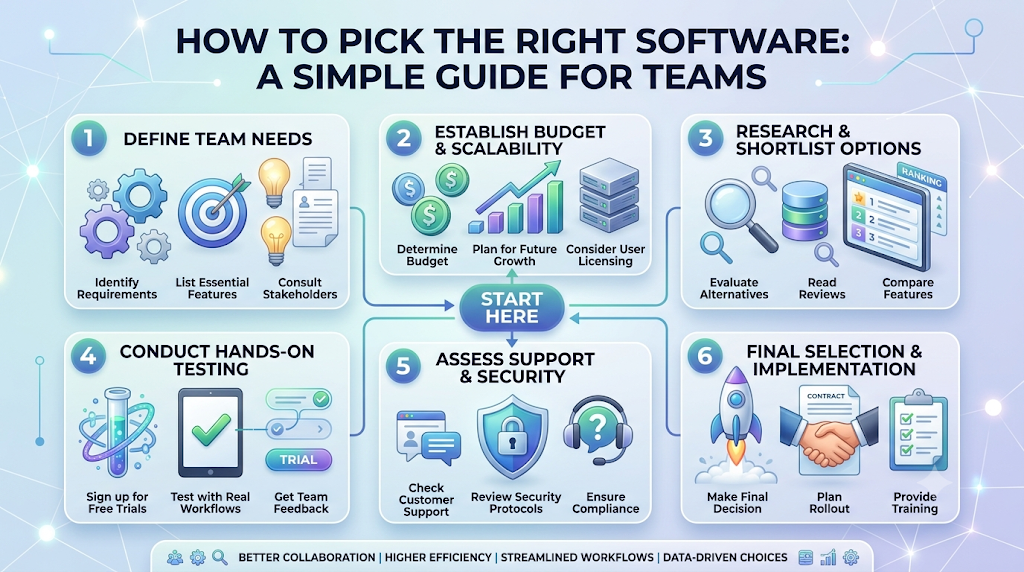
Picking software is hard today. Thousands of apps promise big results. Every website says its tool is the best. Every ad sounds perfect. So teams get confused. Many teams pay for tools they never use. Some buy a yearly plan in a hurry. Then they find the tool does not fit their work. That money is gone. Others sign up for three apps that do the same job. This wastes time and budget. You need a calm way to choose. You need facts, not hype. That is where BestAIToolix.com helps. It is a research platform that puts clear, evidence-based information in one place. This guide shows you how to choose smart. It also shows how to avoid costly mistakes.
What Is BestAIToolix.com?
BestAIToolix.com is a neutral research and comparison platform. It does not sell software. Its job is to help you learn about tools before you buy. The site has a structured catalog. Each tool sits in a clear category. You can use filters to narrow your search. You can filter by price, use case, and team size. Every tool gets judged by the same rules. No brand can pay for a better score.
Why You Need a Structured Software Catalog
Random web searches waste hours. You open ten tabs and read ten ads. Then you still feel lost. An organized catalog fixes this problem. A good software directory groups tools by job. You see project tools in one place. You see design tools in another. So you skip the noise and go straight to what you need. Next, you can build a short list in minutes, not days.
Finding the Right Tools for Your Work
Start with your own needs. Ask how big your team is. Next, check device support. Does your team use phones, Macs, or Windows laptops? Then list your daily tasks. Do you write, code, design, or send invoices? Use these answers as filters. This is the easiest way to find the best software tools for your team. A tool can be famous and still be wrong for you.
Why Neutral Feedback Matters
Not all feedback is equal. Some sites earn money when you click a link. So they praise the tool that pays them most. That is a paid promotion. Real user testing works differently. Testers try the tool and report what happened. Honest software reviews show both good and bad points. Independent software reviews go one step further. No brand pays for them or shapes them. Always ask who wrote a review and why.
Key Evaluation Factors When Choosing Software
Use this table as a quick checklist.
| Evaluation Factor | What to Look For | Why It Matters for Teams |
|---|---|---|
| Ease of use | Clean layout and short learning time | Your team uses it every day |
| Price | Clear plans and no hidden fees | You can plan your budget |
| Security | Data locks and access controls | It keeps company data safe |
| Support | Live chat, email, and help guides | Fast help saves work time |
| Integration | Connects with your current apps | Data moves without extra work |
| Room to grow | Easy to add more users | The tool grows with you |
Exploring the Rise of Machine Learning Apps
Smart apps are now part of daily work. Writers use them to draft text. Developers use them to write and fix code. Designers use them to make images fast. But the market grows fast. New apps appear every week. An AI tools directory helps you keep up. It puts new tools in one place with clear notes. It also helps you find the best AI tools for a specific job. Do not chase every launch. Pick what solves your problem.
How to Evaluate AI Products Side by Side
Testing beats guessing. When you compare AI tools, give each one the same task. Then check three things. First, check speed. How fast does the tool reply? Second, check data privacy. Does it store your files? Does it learn from your data? Third, check output quality. Is the result correct, clear, and useful? Write down a score for each. Use real work, not toy examples.
Making Smart Choices for Companies
Businesses face higher stakes. A bad tool can hurt many people at once. So check security first. Ask where the data lives and who can see it. Next, count your user seats. A seat is one paid user account. Then set a firm budget limit. A good business software comparison covers all of these points. It shows the true cost, not just the sticker price. Every fair software comparison should also list what each plan leaves out.
Comparing Tool Options for Different Business Needs
| Business Stage | Main Software Need | Critical Feature | Risk to Avoid |
|---|---|---|---|
| Startup | Project and task tracking | Easy setup and free plan | Paying for unused features |
| Small business | Sales, billing, and email | Tools that connect to each other | Too many separate apps |
| Growing team | Team chat and file sharing | User roles and permissions | Weak access control |
| Large company | Security and reports | Activity logs and strong support | Being stuck with one vendor |
The Complete Step-by-Step Purchase Roadmap
Good buying follows a plan. This software buying guide gives you four clear steps. First, set a budget. Add the tool price, setup cost, and training time. Second, run a pilot test. A pilot is a small trial with a few users. Run it for two to four weeks. Third, check support channels. Send a test question and see how fast they reply. Finally, read the contract. Look at cancel rules and renewal terms. Only then should you pay.
Real-Life Scenarios From Teams
- A startup needs project software. The founder tests two free plans for two weeks. The team picks the simpler one.
- A marketing team wants an AI writer. They give three tools the same brief. They choose the one with the best draft and safest data rules.
- An IT team finds five chat apps in use. They cut the list to one. They save money and reduce confusion.
Common Mistakes to Avoid When Buying Software
Small errors can cost a lot. Watch out for these:
- Buying a multi-year plan without testing.
- Skipping data privacy checks.
- Ignoring hidden setup fees.
- Choosing a tool just because it is trendy.
- Not asking your team what they need.
- Trusting reviews that brands paid for.
- Forgetting to test customer support.
- Leaving out training time and cost.
- Buying too many seats at the start.
How BestAIToolix.com Can Help
BestAIToolix.com aims to make your search easier. It uses transparent scoring, so you can see how each tool earned its grade. It offers side-by-side matrices. These are tables that put tools next to each other. You spot the differences at a glance. The team also updates pages often. Prices and features change fast, so fresh data matters. You still make the final call.
A Simple 7-Step Tool Selection Process
- Goal: Write down the problem you want to solve.
- Search: Look for tools in a trusted catalog.
- Shortlist: Pick three to five options.
- Compare: Check features, price, and privacy side by side.
- Ask: Talk to your team and to the seller.
- Verify: Try a free trial and read honest reviews.
- Decide: Choose one tool and set a review date.
Frequently Asked Questions (FAQ)
Question 1: What is the best way to start choosing software?
Start with your goal. Write down the problem you need to fix. List the tasks your team does each day. Then note your budget and team size. These simple facts guide every choice after that. Without a clear goal, every tool looks useful. With one, you can quickly rule out the wrong options.
Question 2: How many tools should I put on my shortlist?
Aim for three to five tools. Fewer than three gives you little choice. More than five takes too long to test. Pick tools that fit your budget and main needs. Then test each one with the same task. This keeps the process fair and fast. You will see the real differences quickly.
Question 3: Are free trials worth using?
Yes, free trials are very useful. They let you test a tool with real work before you pay. Set a goal for the trial and write down what you want to learn. Invite a few teammates to try it too. Then decide with facts. Remember to cancel before the trial ends if you do not want the tool.
Question 4: How do I spot a fake or paid review?
Look for signs of hype. Fake reviews often use big praise and give no details. Paid reviews may hide the downsides. Check if the writer shows real tests or screenshots. Look for both good and bad points. Also see if the site tells you how it earns money. Honest sites share that openly.
Question 5: What should I check about data privacy?
Ask where the tool stores your data. Ask who can see it. Check if the company sells or shares your files. For AI tools, ask if your data trains the model. Read the privacy page and look for clear answers. If the answers are vague, treat that as a warning sign.
Question 6: How do I compare prices fairly?
Look at the full cost, not the sticker price. Add setup fees, extra seats, and add-ons. Check if the price changes after the first year. Ask about training costs too. Then compare the yearly total for each tool. This shows you the real price and helps you avoid surprise bills later.
Question 7: Should a small business use AI tools?
Yes, if the tool solves a real problem. AI can save time on writing, support, and data tasks. Start with one small task. Measure the time you save. If it works, add more. Do not buy AI just because it is popular. A simple tool that fits your work often beats a fancy one.
Question 8: How long should a pilot test last?
Most pilot tests need two to four weeks. That gives your team time to use the tool on real tasks. Pick a small group of users. Give them clear jobs to try. Ask for honest feedback each week. At the end, compare results with your goal. Then decide if the tool is worth buying.
Question 9: Is a yearly plan better than a monthly plan?
Yearly plans often cost less. But they lock you in. Start with a monthly plan while you test. If the tool works well, switch to a yearly plan. Ask if you can get a refund. Read the cancel rules first. A small saving is not worth a tool your team hates.
Question 10: How do I avoid buying duplicate apps?
Make a list of every tool your team uses now. Ask each team what they pay for. Group the tools by job. You will often find two or three apps that do the same work. Keep the best one and cancel the rest. Check this list again every six months or so.
Question 11: What support should I expect from a software company?
Expect clear help guides, fast email replies, and live chat for urgent issues. Good companies also offer setup help and training for new users. Test support during your trial. Send a simple question and see how long the reply takes. Slow answers during a trial usually mean slower answers after you pay.
Question 12: How often should we review our software?
Review your tools at least once a year. Check who uses each tool and how often. Look at the cost and compare it to the value. Cancel tools that nobody uses. Also check for better options, since new tools launch often. A yearly review keeps your budget lean and your team happy.
Conclusion
Choosing software does not need to be hard. First, define your goals early. Know the problem before you look at tools. Next, test free trials with real work. Then verify the total cost, including fees and extra seats. Read honest feedback and check data privacy. Most of all, pick software that solves real problems, not one that just looks trendy. A clear process saves money and stress. It also helps your team do better work. If you want a calm place to start, try BestAIToolix.com and explore its guides and comparisons. Take your time, use the steps in this guide, and choose with confidence.
Leave a Reply